
Pilates is a practice with many entry points. This guide is here to offer context without making the experience more complicated than it needs to be.
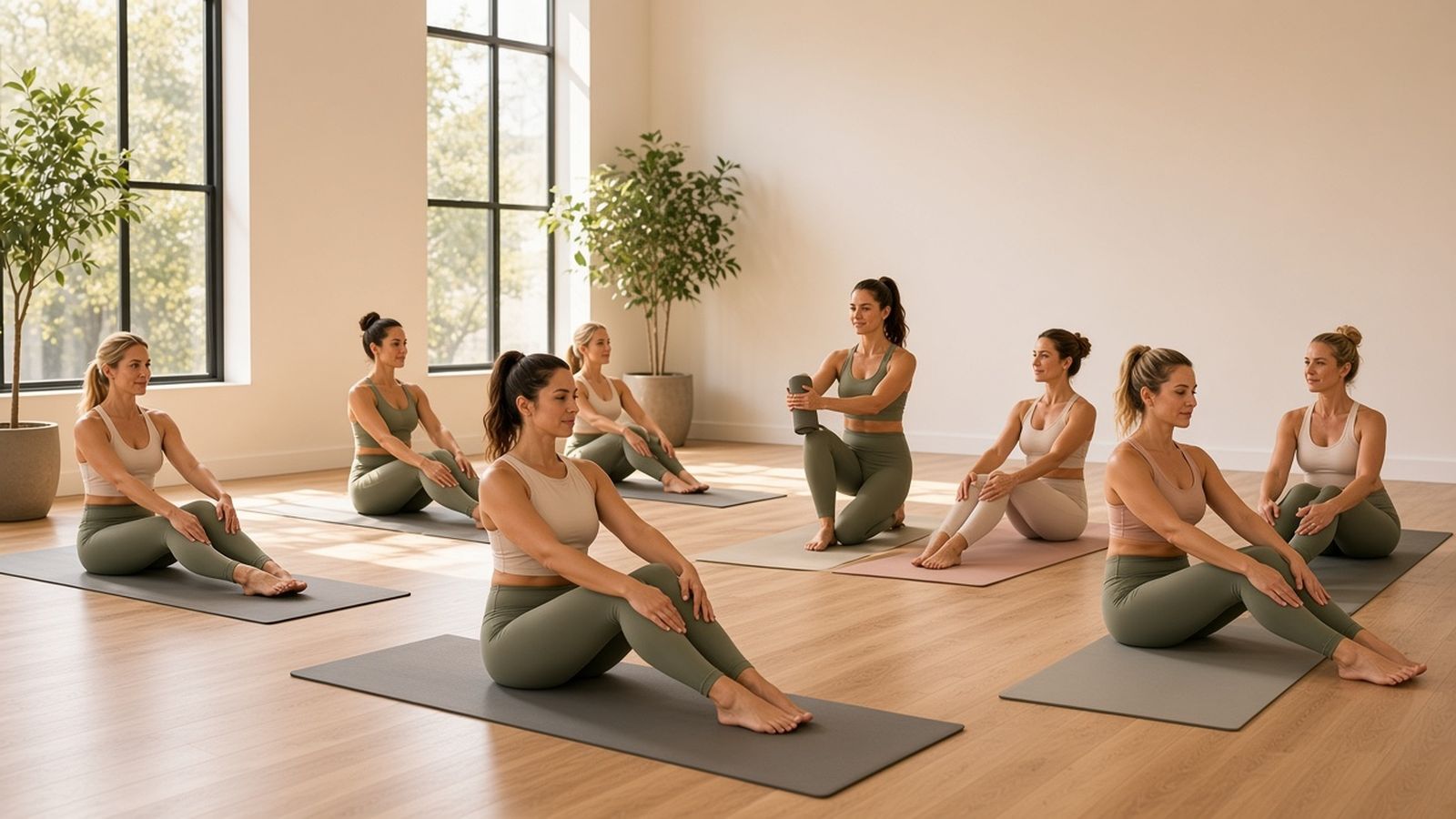
Barre and Pilates
Barre classes often combine elements of dance, strength training, balance, and endurance in a format built around the barre and small-range movement. Pilates brings its own emphasis on alignment, control, breath, and coordinated strength. There can be overlap in the way classes use precise positions and focused repetition, but the experience and teaching goals are not identical.
For a visitor, the choice may simply come down to what kind of energy feels right. A barre class may feel rhythmic and lively; a Pilates class may feel more deliberate and apparatus-focused. Many people enjoy both because the contrast keeps their movement life interesting.
Yoga and Pilates
Yoga encompasses many lineages and approaches, from physically active practices to contemplative and restorative classes. Pilates is a movement method with a different history and vocabulary. Both can invite attention to breath, posture, sensation, and control, but a class’s pace and purpose can vary significantly from one teacher to another.
Good descriptions help participants choose without turning the comparison into a competition. A studio might explain whether its class is athletic, restorative, traditional, contemporary, or beginner-friendly. Clear language gives people agency and supports a more thoughtful path through wellness.
Clinical and wellness partnerships
Physical therapists, chiropractors, and other licensed professionals may work with people who have pain, injury, or specific health considerations. Pilates instructors can be valuable movement educators, but they should not diagnose or promise clinical outcomes outside their scope. A referral relationship can help a client receive the right kind of support at the right time.
The same principle applies to wellness businesses. Massage therapists, nutrition professionals, mental health practitioners, and community organizations can create useful partnerships when roles are explicit and marketing remains honest. A connected wellness ecosystem gives people more choices without asking them to treat every service as interchangeable.