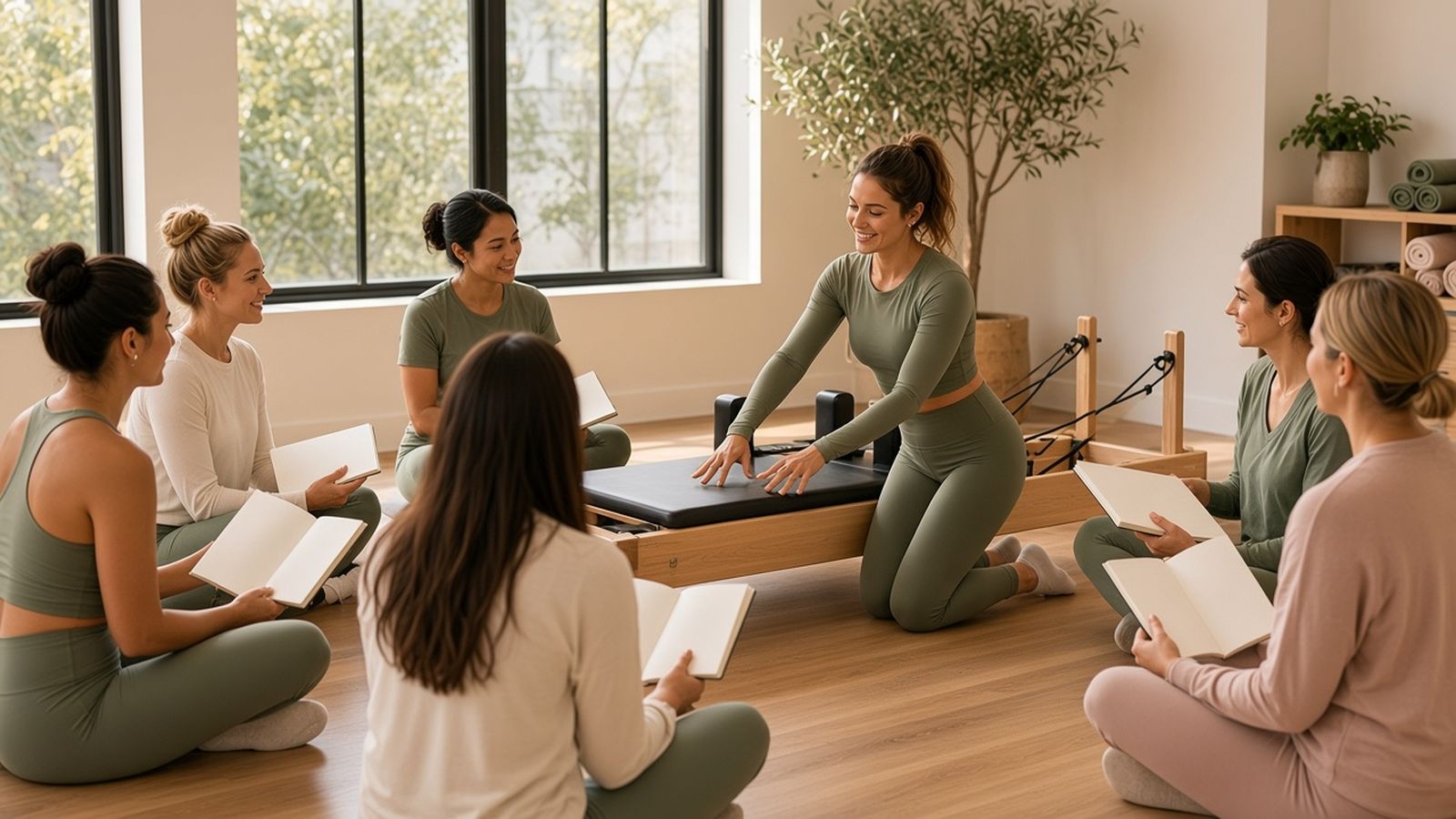
Pilates is a practice with many entry points. This guide is here to offer context without making the experience more complicated than it needs to be.
Start with the kind of teacher you want to be
Before comparing programs, spend time in different Pilates environments. Observe how instructors explain movement, offer options, manage a group, and create a sense of safety. Notice what kinds of teaching make you curious and what kinds of communication help you understand your own body. This early observation is useful because instructor education is not only a credential decision; it is the beginning of a teaching philosophy.
There are many routes into the profession, including comprehensive programs, mat-focused study, equipment specializations, apprenticeships, and continuing education. Requirements and recognition vary by location and employer, so prospective instructors should review the program curriculum, practice expectations, assessment process, faculty experience, and graduate support before enrolling.
Build a strong foundation
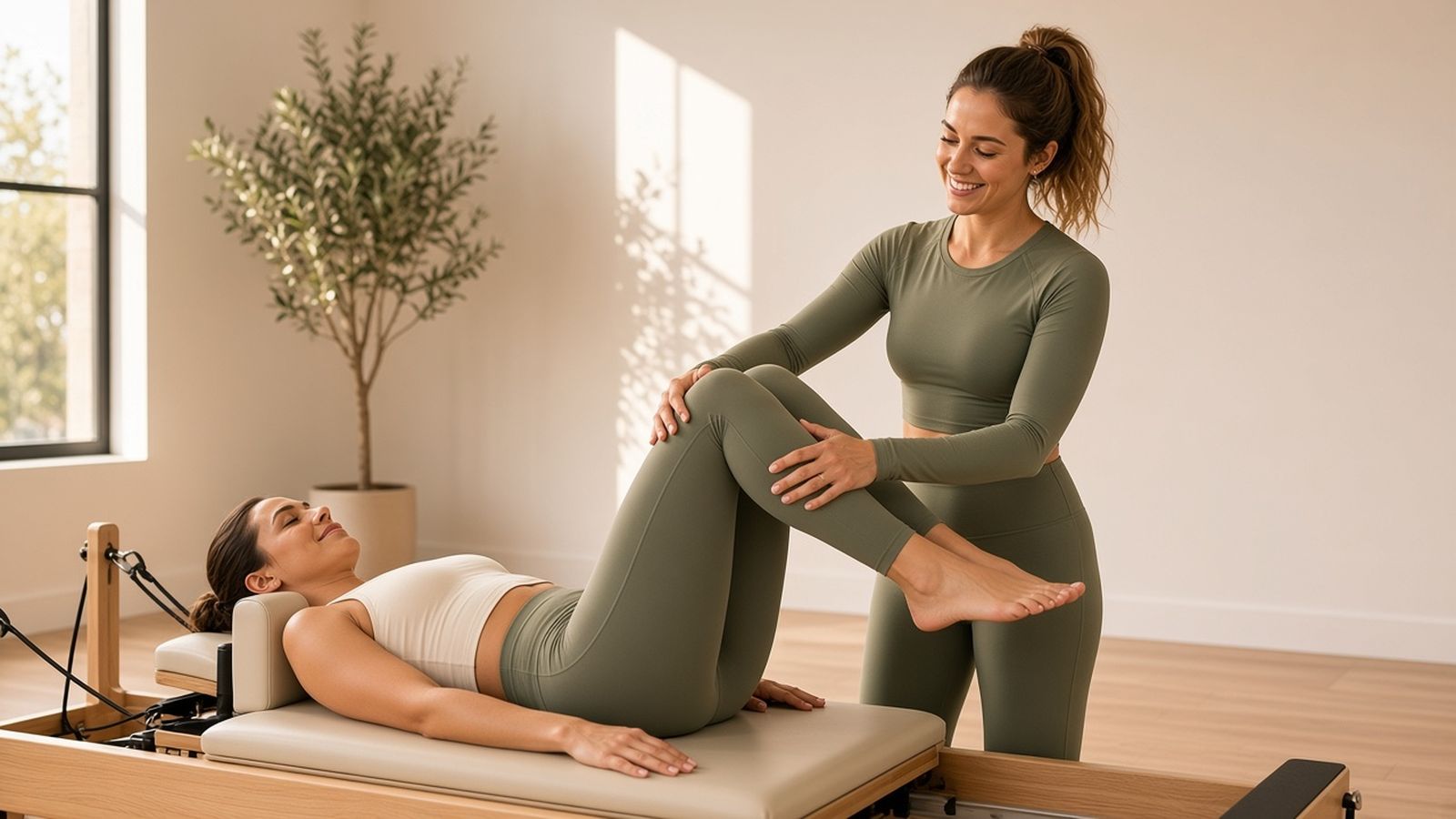
A well-rounded education should connect exercises to principles rather than treating a repertoire as a list to memorize. Look for anatomy and movement fundamentals, observation and cueing, contraindications, class design, modifications, equipment safety, and supervised practice. The best programs help students learn to see the person in front of them, not simply deliver a predetermined sequence.
Practice teaching is essential. Begin with friends or peers who understand that you are learning, ask for specific feedback, and get comfortable speaking clearly while watching a room. Keep notes on what worked, what was confusing, and how different bodies responded. A reflective habit will serve you long after the formal program ends.
Find mentorship and keep studying
New instructors benefit from observing experienced teachers and receiving feedback in real settings. A mentor can help with pacing, transitions, hands-on communication, professional boundaries, and the many small decisions that are difficult to learn from a manual. When seeking mentorship, look for someone whose teaching is both skilled and respectful, and clarify the expectations of the relationship.
Continuing education is part of responsible practice. It may take the form of anatomy study, pre- and postnatal education, older-adult programming, accessibility, pain science, apparatus work, or communication skills. No single course makes an instructor expert in every population. Good educators stay curious about the limits of their training and refer out when another professional is better equipped to help.
Shape a sustainable working life
Teaching can happen in boutique studios, larger brands, gyms, wellness centers, private spaces, community programs, or a mix. Early on, learn how each environment handles scheduling, pay, preparation time, client records, substitute coverage, and professional development. Keep accurate notes about your work, understand your agreements, and make space for your own recovery.
A Pilates career grows through reliability as much as visibility. Arrive prepared, communicate early, protect client privacy, and treat every class as an opportunity to make movement more understandable. Over time, your voice will become clearer. Let it be shaped by careful study, honest self-assessment, and a genuine respect for the people who trust you with their practice.