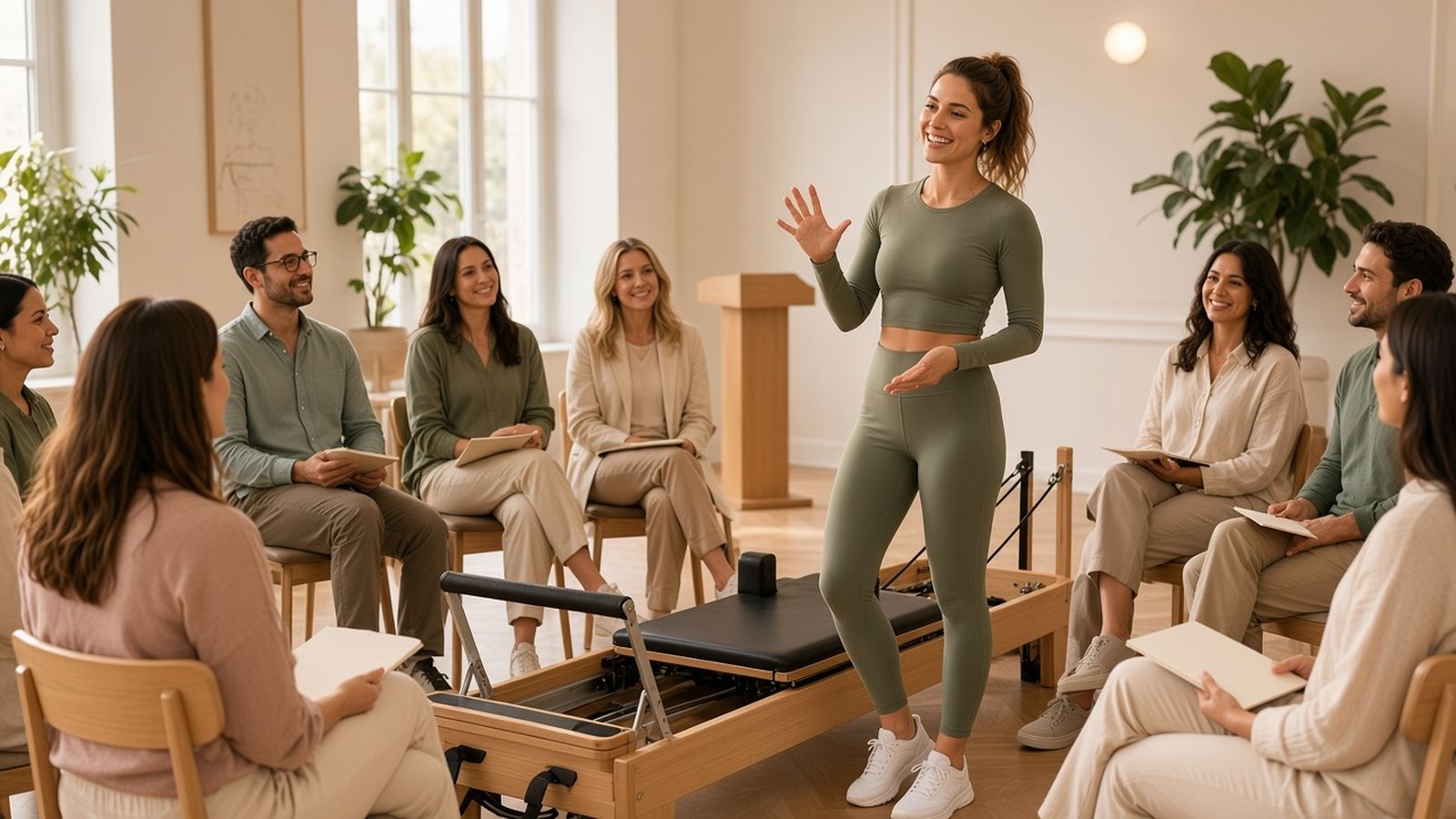
Pilates is a practice with many entry points. This guide is here to offer context without making the experience more complicated than it needs to be.
Events create useful collisions
A Pilates event can be a workshop on a specific apparatus, a teacher-training intensive, a business gathering, a movement class, or a conference with several tracks. What these formats share is the chance to step outside the weekly schedule. New ideas become easier to notice when you are surrounded by people who approach familiar questions from different angles.
For instructors, that can mean hearing a cue explained in a new way or reconsidering how a class is structured. For studio owners, it can mean meeting a vendor, future hire, or peer who has solved a practical problem. For students, it can be an encouraging reminder that the method is larger than one room and that curiosity is a valid reason to keep exploring.
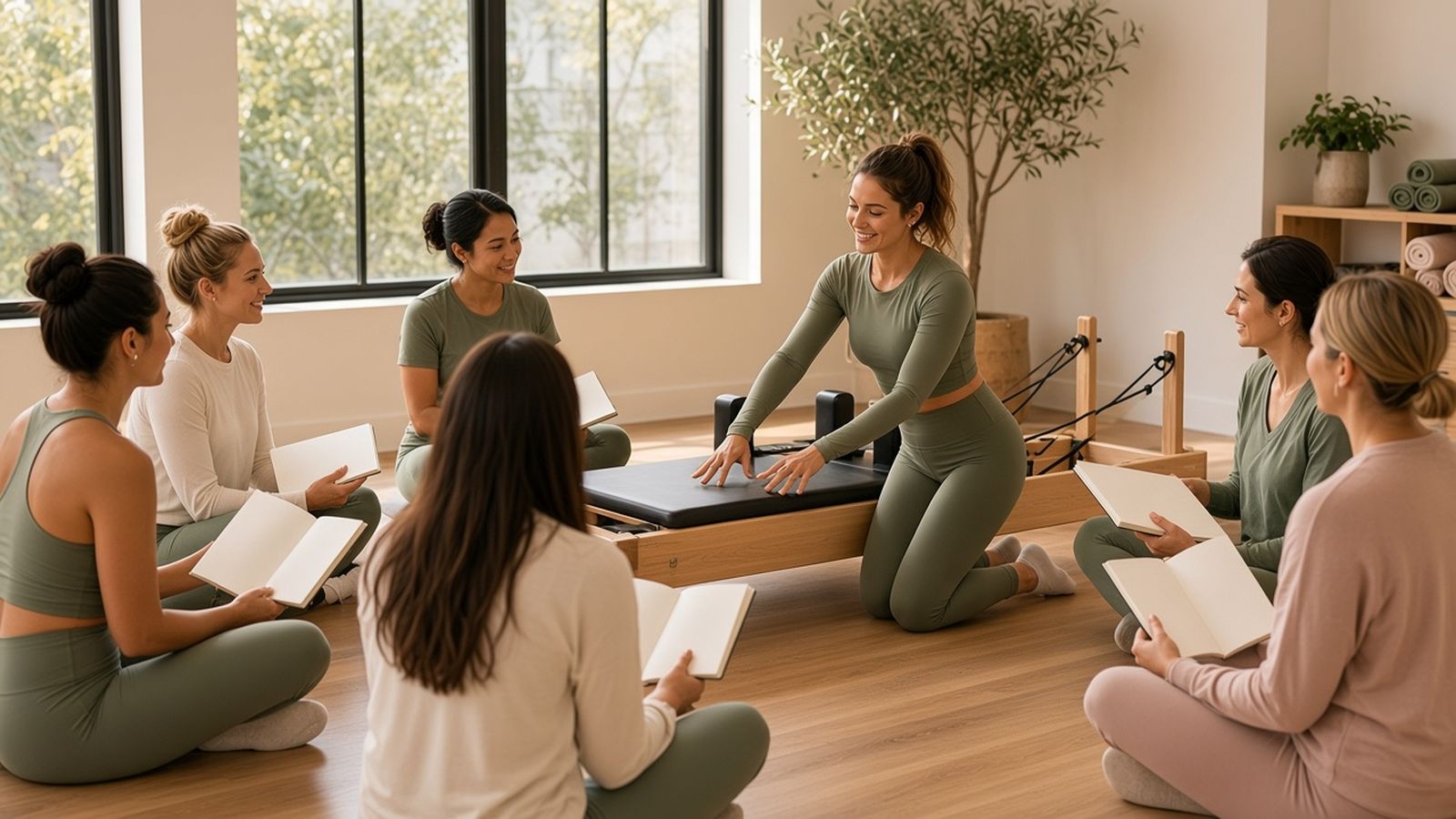
Choose the right format
Start with the outcome you want. If you need focused technical study, a small workshop may be more useful than a large expo. If you want broad exposure, a conference with multiple sessions can offer a wider view. If you are building relationships, allow enough unstructured time for conversations rather than filling every hour with classes.
Read the event description carefully and review the faculty or speakers. Look for clear information about prerequisites, equipment, accessibility, schedule, cancellation policies, and what is included. Reputable organizers make it easier to understand who an event is for and what participants can reasonably expect to take away.
Learn with generosity
The most valuable event experiences are rarely about collecting credentials or rushing through every session. Give yourself permission to attend fewer things with more attention. Take notes in your own words, ask questions respectfully, and notice how ideas might apply to the people you actually teach or serve.
Events also work best when participants share credit and context. Acknowledge the teachers and traditions behind the material, avoid presenting someone else’s language as your own, and remember that different lineages may use different terms for related ideas. Curiosity and humility make professional spaces safer and more useful.
Bring the learning home
After an event, choose one or two ideas to explore slowly. Test them in your own practice, discuss them with a mentor, and adapt them thoughtfully before introducing them to clients. A notebook full of highlights is less valuable than one practical change that makes a class clearer or more responsive.
Studio owners can also extend the value of events by sharing takeaways with their teams, supporting staff education, or hosting small local gatherings. The Pilates community is strengthened when learning travels through relationships, not just through marketing. The best event leaves people more connected, more informed, and more generous in the room.