Pilates is a practice with many entry points. This guide is here to offer context without making the experience more complicated than it needs to be.
What the reformer changes
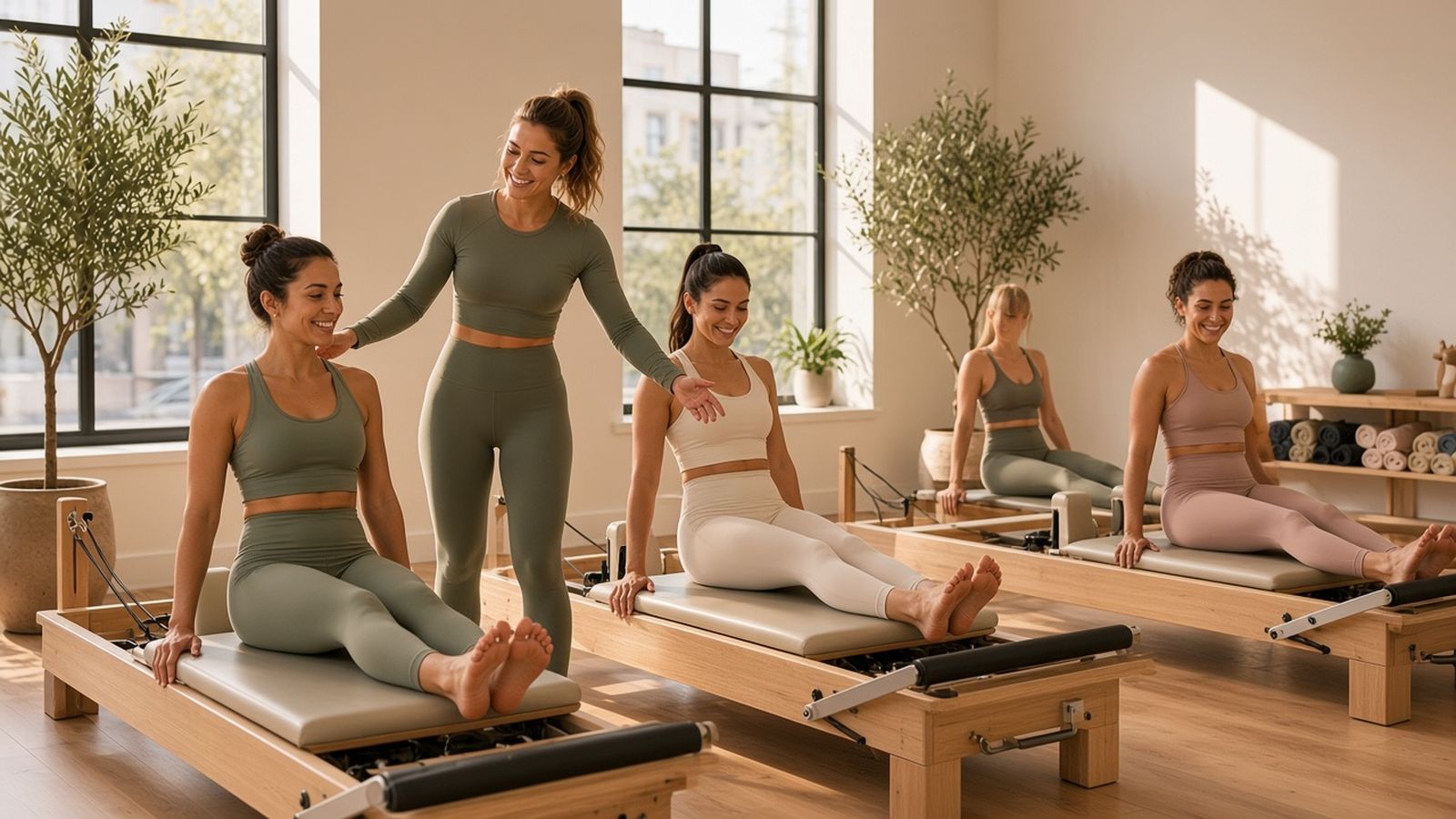
The reformer is a spring-based piece of equipment with a moving carriage, straps, and adjustable resistance. It can provide feedback, support, assistance, and challenge. The moving surface asks you to organize your body with attention, while the springs can make a movement feel more accessible or more demanding depending on the setup.
Many people enjoy reformer classes because the equipment offers variety and a clear sense of progression. A class may move between footwork, core work, upper-body exercises, and standing patterns. Group reformer classes are often structured around a shared sequence, while private sessions can be tailored more specifically to an individual’s goals and history.
What mat practice develops
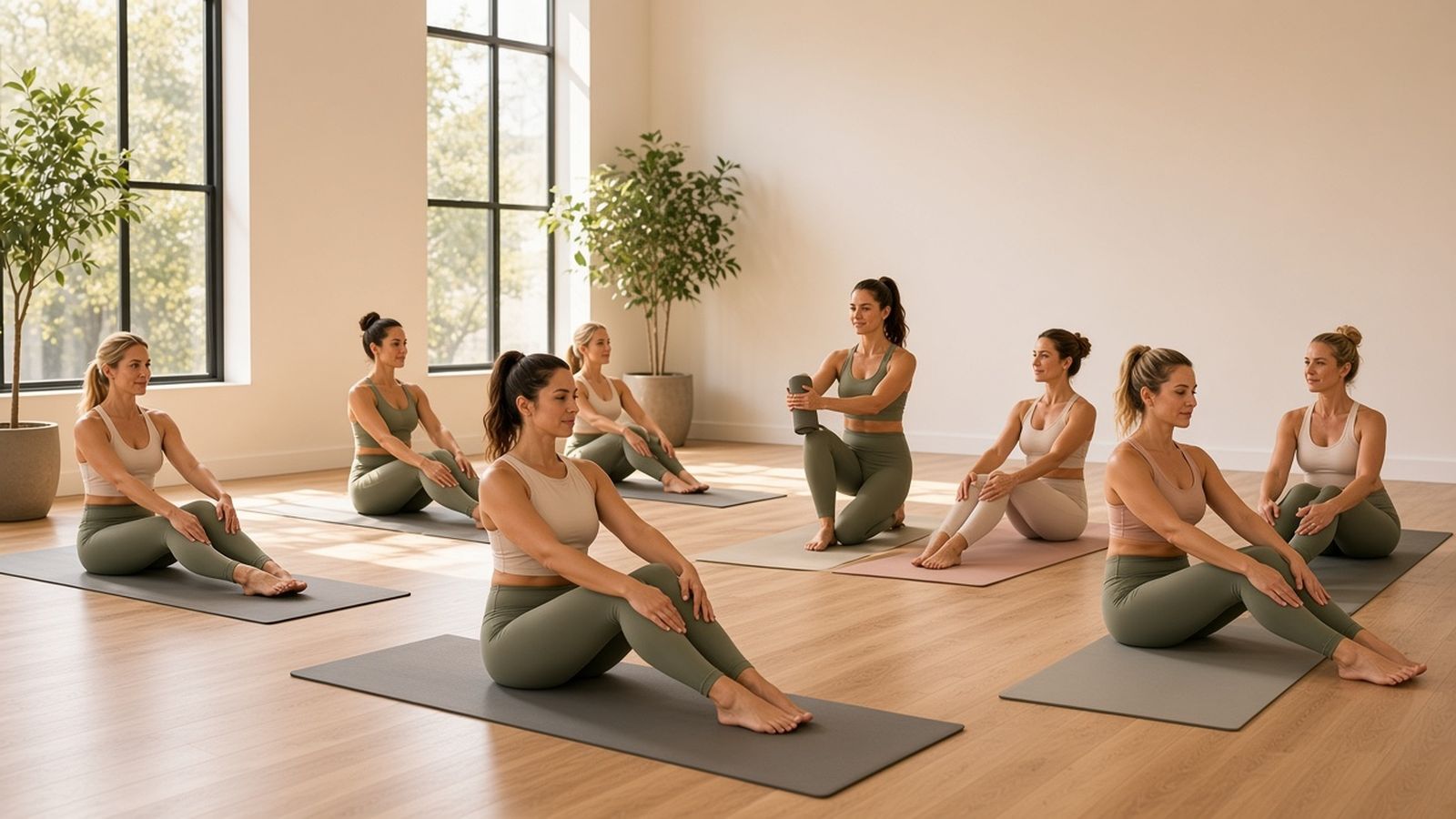
Mat Pilates uses the floor, body weight, and sometimes small props. Because the equipment is minimal, it is a flexible format for home practice, travel, and group classes. Mat work asks you to create support from your own organization and can make breath, spinal movement, and core coordination especially clear.
Mat does not mean easy. A well-taught mat class can be subtle, athletic, restorative, or all three. Props such as a ring, ball, or band can change the feedback without turning the practice into an equipment workout. Many people appreciate the directness of mat work and the way it helps them carry Pilates principles into everyday movement.
Choosing a starting point
Choose reformer if you are drawn to equipment, enjoy clear resistance, or want the structure of a studio-based class. Choose mat if you prefer a simpler setup, want to build fundamental awareness, or would like a format that is easy to continue anywhere. If you have a specific concern, ask the studio whether an introductory, private, or small-group session would be appropriate.
You do not have to choose permanently. Reformer and mat can support one another, and many instructors recommend experiencing both. Pay attention to how you feel during and after class, whether the teacher explains the work clearly, and whether the environment makes you want to return. The best format is the one that helps you practice with interest and consistency.