
Pilates is a practice with many entry points. This guide is here to offer context without making the experience more complicated than it needs to be.
Begin with a clear point of view
A studio concept is more useful when it describes a real experience rather than a generic promise. Decide who you hope to serve, what kinds of classes you want to offer, and what you want the room to feel like. The answer might be a small neighborhood studio built around private instruction, a reformer-focused group schedule, a classical environment, or a flexible space that hosts several formats.
This clarity helps with every later decision. It informs the size and layout of the space, the equipment plan, the schedule, the tone of the brand, and the kind of instructors you hire. It also gives potential clients a reason to understand why your studio exists instead of asking the logo to do all the work.
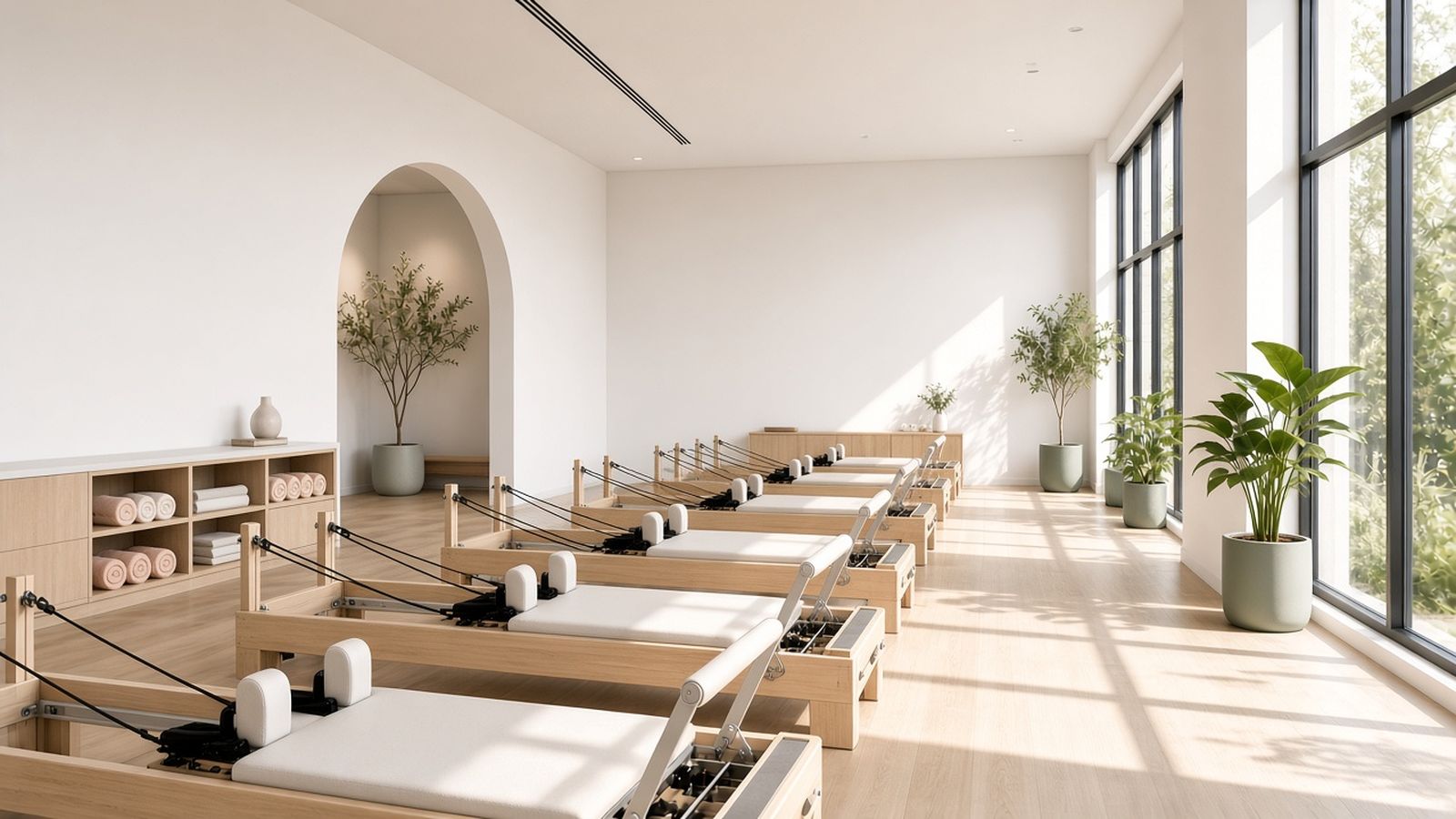
Plan the space around the experience
A beautiful room is helpful, but a functional room is essential. Consider circulation, storage, ventilation, acoustics, lighting, privacy, accessibility, changing areas, cleaning routines, and how clients enter and leave. Equipment placement should make teaching and spotting comfortable, not simply make a photograph look full.
When reviewing a location, think about the daily journey. Is it easy to find? Is there a practical arrival experience? Can instructors prepare between sessions? Can the space adapt if the schedule changes? A measured approach to the lease, build-out, permits, insurance, and equipment orders protects the creative vision from avoidable operational stress.
Build a team and a standard of care
Instructors are the living expression of the studio. Look for strong foundations, clear communication, good judgment, and a willingness to keep learning. An impressive personal practice does not automatically translate to effective teaching. Auditions, references, observation, and a shared approach to modifications can help you make thoughtful decisions.
Write down the standards you want people to feel: how clients are welcomed, how injuries are handled, how privacy is protected, how feedback is shared, and how the room is reset. A simple operating handbook can make expectations easier to discuss and reduce the pressure on one person to remember every detail.
Launch with relationships, not noise
A strong opening is an invitation to experience the studio. Offer clear information about classes, first visits, pricing, preparation, and who the studio is designed for. Consider small previews, neighborhood partnerships, or introductory events that allow people to meet the team without creating a high-pressure sales atmosphere.
After opening, listen carefully. Track which questions repeat, where new clients hesitate, which classes feel balanced, and what instructors need to teach well. The first version of the schedule is only a starting point. A studio becomes durable through the steady work of improving the experience, communicating honestly, and earning trust one visit at a time.